
Affiliate disclosure: This article contains affiliate links. If you make a purchase through one, I may earn a commission at no additional cost to you.
Greasing the driveshaft bearings is one of the most important maintenance jobs on an outboard jet. It only takes a few minutes, but skipping it can let water sit inside the bearing housing and lead to worn seals, damaged bearings, and an expensive pump repair.
Outboard Jets recommends greasing the jet after each use. I make it part of my cleanup routine at the end of every outing, while any water in the bearing housing can still be purged.
What You Need
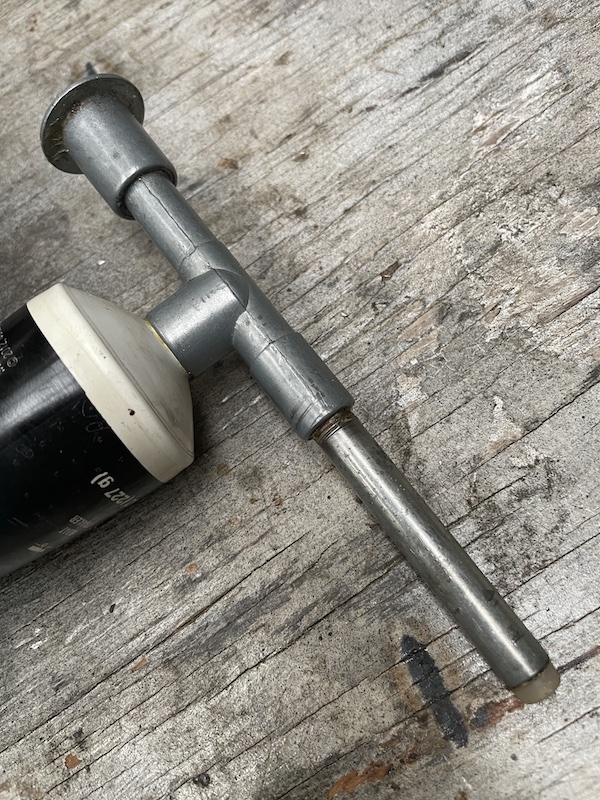
- A low-pressure hand grease gun
- An Outboard Jets-approved grease
- A clear zip-top sandwich bag
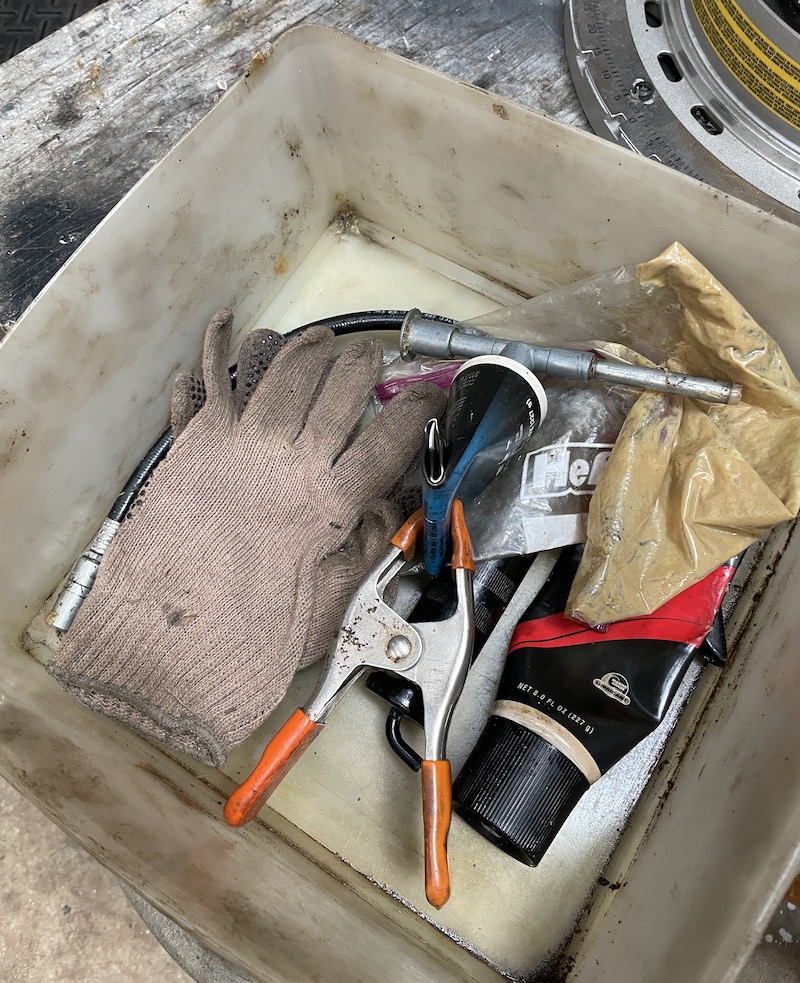
- Gloves and a shop rag
The clear bag is more than a cleanup trick. It lets you see the water, color, and consistency of the grease coming out of the bearing housing. That makes every grease job a quick inspection.
Use a Low-Pressure Grease Gun
Use a low-pressure hand pump such as the Quicksilver Lubrimatic 30500 plunger-type grease gun or the Jiffy Luber recommended by Outboard Jets. Pump slowly. A high-pressure gun or forcing grease in too quickly can build enough pressure to damage or dislodge the bearing seals.

Which Grease Should You Use?
Outboard Jets currently approves three greases for its pumps:
- Quicksilver 2-4-C (my recommendation): an NLGI No. 2 grease that Outboard Jets identifies as a good warm-climate choice
- Lubriplate 630-2: another approved NLGI No. 2 grease
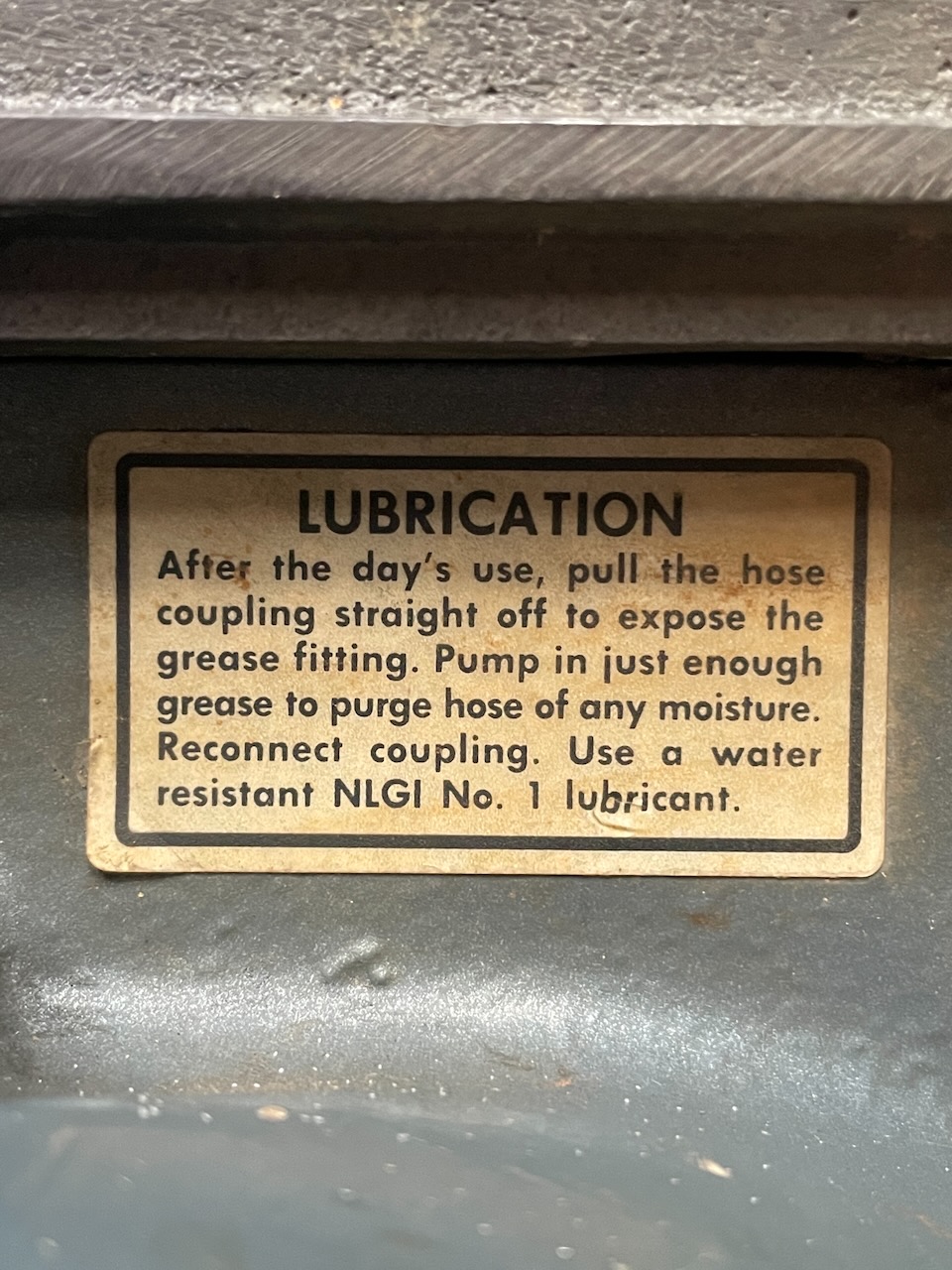
- Lubriplate 630-AA: the thinner NLGI No. 1 grease that Outboard Jets identifies as a good cold-climate choice
My recommendation is Quicksilver 2-4-C. It is the grease I use in my outboard jet. Do not grab a random all-purpose or marine grease just because it fits the gun. The pump needs a water resistant grease with the consistency specified by Outboard Jets. If your particular jet-drive manual calls for something different, follow that manual.
The small grease pouches used in low-pressure guns feel a lot like toothpaste tubes. As the pouch empties, fold the bottom over and hold it with a small wood clamp to keep the grease pushed toward the outlet.

How to Grease an Outboard Jet: Step by Step
- Shut the engine off. Remove the key and make sure nobody can start the engine while you are working around the jet pump.
- Find the grease fitting and vent hose. The fitting is on the side of the pump housing. A short rubber lube hose is connected to it when the jet is in use.
- Disconnect the vent hose. Work the hose coupling off the grease fitting carefully rather than yanking on the hose.
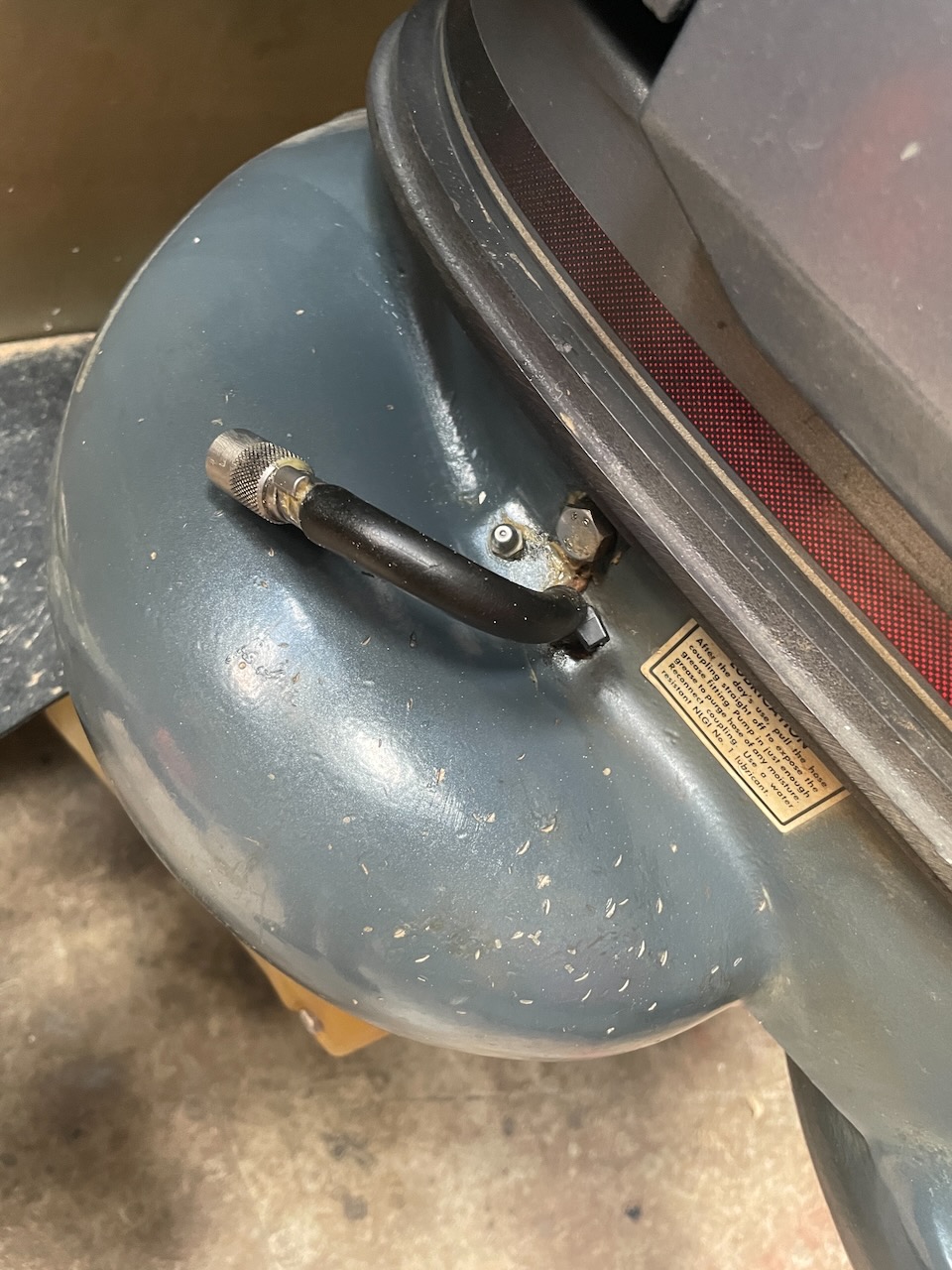
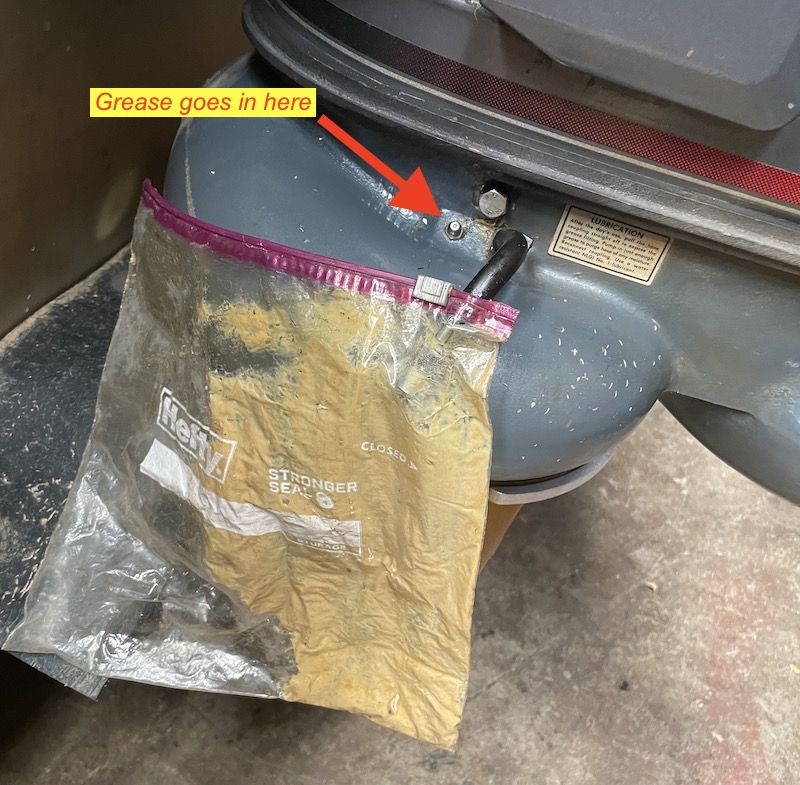
Pulling the hose coupling straight off exposes the grease fitting. - Bag the end of the hose. Put the open hose end inside a clear sandwich bag and close the bag around it. This catches the old grease and lets you inspect it.
- Attach the low-pressure gun. Seat it squarely on the grease fitting.
- Pump slowly. Add grease until the old grease and any water are pushed through the vent hose into the bag. You are looking for fresh grease with the moisture purged—not a particular number of pumps.
- Inspect what came out. Check the bag for water, grit, or dark gray grease. A little moisture can happen; a growing amount of water or dirty gray grease needs attention.
- Reconnect the vent hose. Remove the grease gun, wipe the fitting clean, and firmly reconnect the hose coupling before operating the jet.
How Much Grease Does an Outboard Jet Need?
There is no useful one-size-fits-all pump count. Add grease slowly until the vent hose fills and any water is purged. The amount varies with the gun, the length of the hose, and how much grease the housing needs.
More pressure is not better. Once clean grease is reaching the vent hose and the water is out, stop and reconnect the hose. The job is to replace what the system needs and purge moisture, not to pack the housing as hard as possible.
What the Purged Grease Can Tell You
Inspecting the bag every time gives you a simple history of the bearing housing:
- A small amount of water: Purge it and watch for a change on future outings.
- Increasing water from one service to the next: This can indicate seal wear.
- Dark, dirty gray grease: Outboard Jets recommends inspecting the bearing and seals.
- No grease reaches the vent hose: Stop and investigate. Grease may be escaping past worn seals or pooling elsewhere in the pump.
There is also a small relief or weep hole on the opposite side of the pump. A small amount of grease can seep from this hole if pressure builds in the bearing housing, so one trace of grease does not automatically prove a failed seal. Repeated heavy leakage, grease that never reaches the vent hose, increasing water, noise, or dark grease is a reason to have the seals and bearings inspected.
Common Greasing Mistakes
- Using an unknown or unapproved grease
- Pumping a high-pressure grease gun too quickly
- Stopping before water is purged from the hose
- Ignoring a change in the color or moisture content of the old grease
- Forgetting to reconnect the vent hose before launching
Make It Part of Your Post-Trip Routine
I keep a small container near the boat with the grease gun, grease, gloves, clear bags, and a rag. When everything is together, the job only takes a few minutes at the end of the day. That simple routine helps protect the bearings and gives me an early warning when a seal begins to wear.
While you are doing post-trip maintenance, see how to flush an outboard jet. If you run rocky water, my guide to straightening bent intake bars covers another common repair.
Frequently Asked Questions
How often should I grease an outboard jet?
Outboard Jets’ current service guidance says to grease the jet after each use. Making it part of your cleanup routine also lets you catch increasing water or discoloration early.
Can I use a regular grease gun?
A low-pressure gun is the safest choice and is recommended by Outboard Jets. Whatever gun you use, grease the pump slowly so pressure does not build inside the bearing housing.
Can I use any marine grease?
No. Use an approved water resistant grease of the proper consistency. My recommendation is Quicksilver 2-4-C, which is the grease I use. Outboard Jets also approves Lubriplate 630-AA and Lubriplate 630-2.
Why is grease not coming out of the vent hose?
Grease may be escaping past worn seals or pooling elsewhere. Outboard Jets recommends checking the opposite side of the unit and inspecting the pump if the grease is not reaching the hose.
Does grease coming from the small weep hole mean the seal failed?
Not necessarily. A small amount can seep from the relief hole when too much pressure builds. Ongoing leakage, grease bypassing the vent hose, increasing water, or dark gray grease deserves a closer inspection.