
Affiliate disclosure: This article contains affiliate links. If you make a purchase through one, I may earn a commission at no additional cost to you.
One of the best ways to improve an outboard jet boat’s performance is to reduce weight. Replacing a heavy AGM or lead-acid battery with lithium can remove a surprising amount of weight while providing more useful battery life. Weight matters on an outboard jet boat, and this is one of the simplest places to reduce it.
I started having trouble getting the boat to start after upgrading my electronics, specifically after adding a new 10-inch Garmin 106SV and Panoptix LiveScope system. My starting battery was an Optima BlueTop 55Ah D34M, and it had always served me well. I still think it’s a solid battery, but lithium made more sense for my outboard jet. The replacement increased capacity from 55Ah to 100Ah while cutting more than 17 pounds from the boat.
An outboard jet can carry about 25 pounds for every powerhead horsepower. For example, an engine with 115 powerhead horsepower—rated at 80 horsepower at the jet—can carry a total load of about 2,875 pounds. That includes the hull, captain, passengers, fuel, batteries, tackle, drinks, and everything else in the boat.
Using that ratio, removing 25 pounds has roughly the same effect on the boat’s power-to-weight ratio as adding one powerhead horsepower, or about 0.7 horsepower at the jet. Dropping 50 pounds is comparable to gaining about 1.4 jet horsepower. You aren’t actually increasing the engine’s output, but you are giving the available horsepower less weight to move.
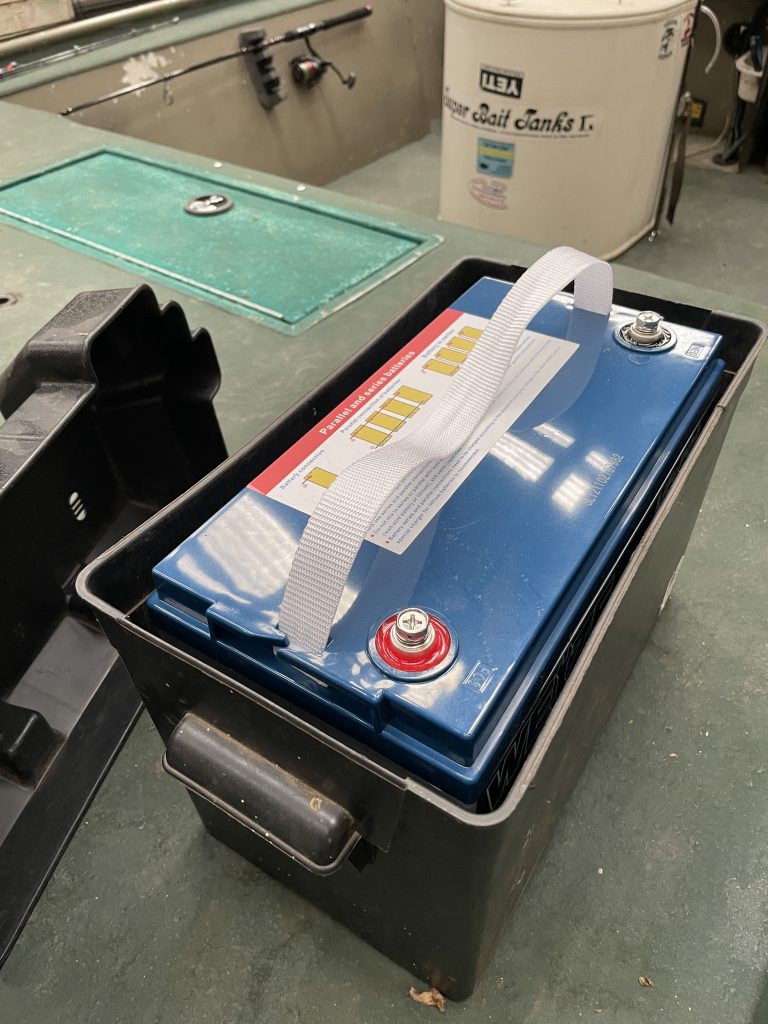
The Optima was the only battery running my boat’s 12-volt system. It started my 115/80 Yamaha jet and powered every electronic on the boat except the trolling motor. I replaced it with a Weize 12V 100Ah LiFePO4 battery from Amazon.
Before ordering it, I read a lot of reviews and watched several battery teardown videos to better understand how lithium batteries work. Based on what I found, the Weize used good-quality cells and components and was a good value for the price.
Fitment
The Weize 100Ah fits directly into a Group 31 marine battery box, so this can be a plug-and-play change for many boats.
The Weize, like most lithium batteries, does not come with terminal studs. Instead, it uses metric M8 bolts that thread into the aluminum base of each terminal. The supplied bolts are not very long. If you currently have a large number of connectors on each terminal, you may need to move them to a circuit panel. My preference is to install studs with Loctite and use nuts like a standard marine battery.
Either way, be careful with the terminal bases. They are aluminum and can be stripped by applying too much torque.
Charging
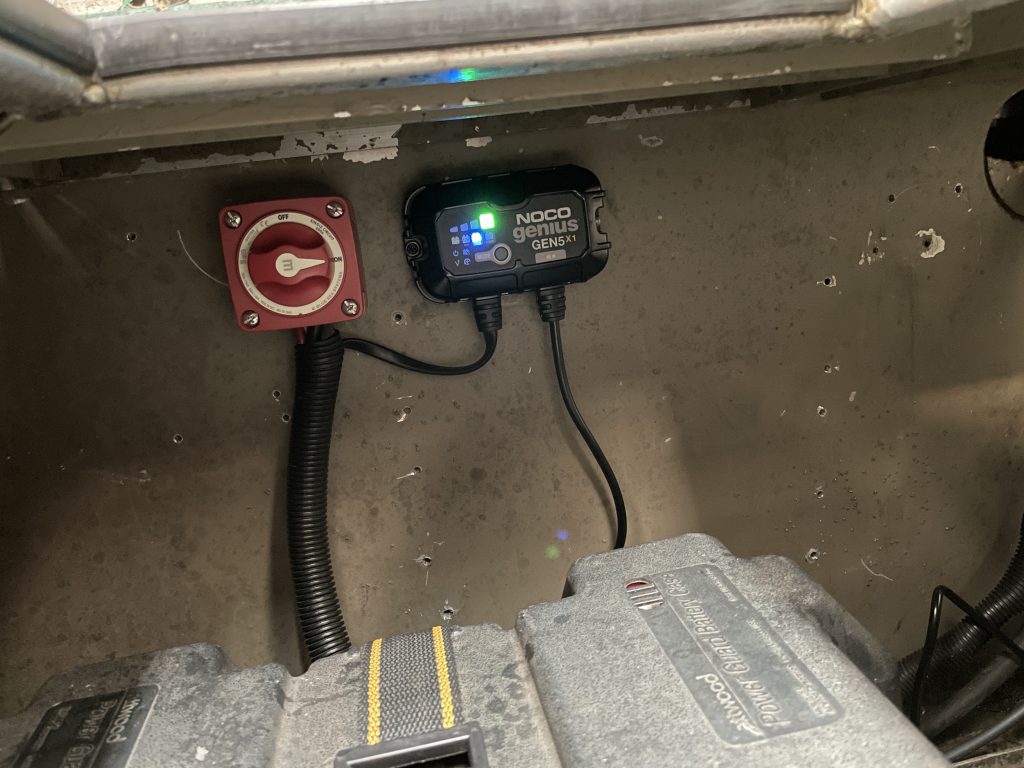
Lithium batteries use a different charging profile than standard lead-acid and AGM batteries, so you need a charger with a lithium setting. I chose the NOCO Genius 5×1 single-bank onboard charger for my installation.
The NOCO can be adjusted for the type of battery being charged and has served me well. Its large lights show the charging mode and state of charge, which is helpful because mine is installed below deck. I can easily peek through the hatch to see whether the battery is ready to go.
Upgrading the Trolling Motor Batteries
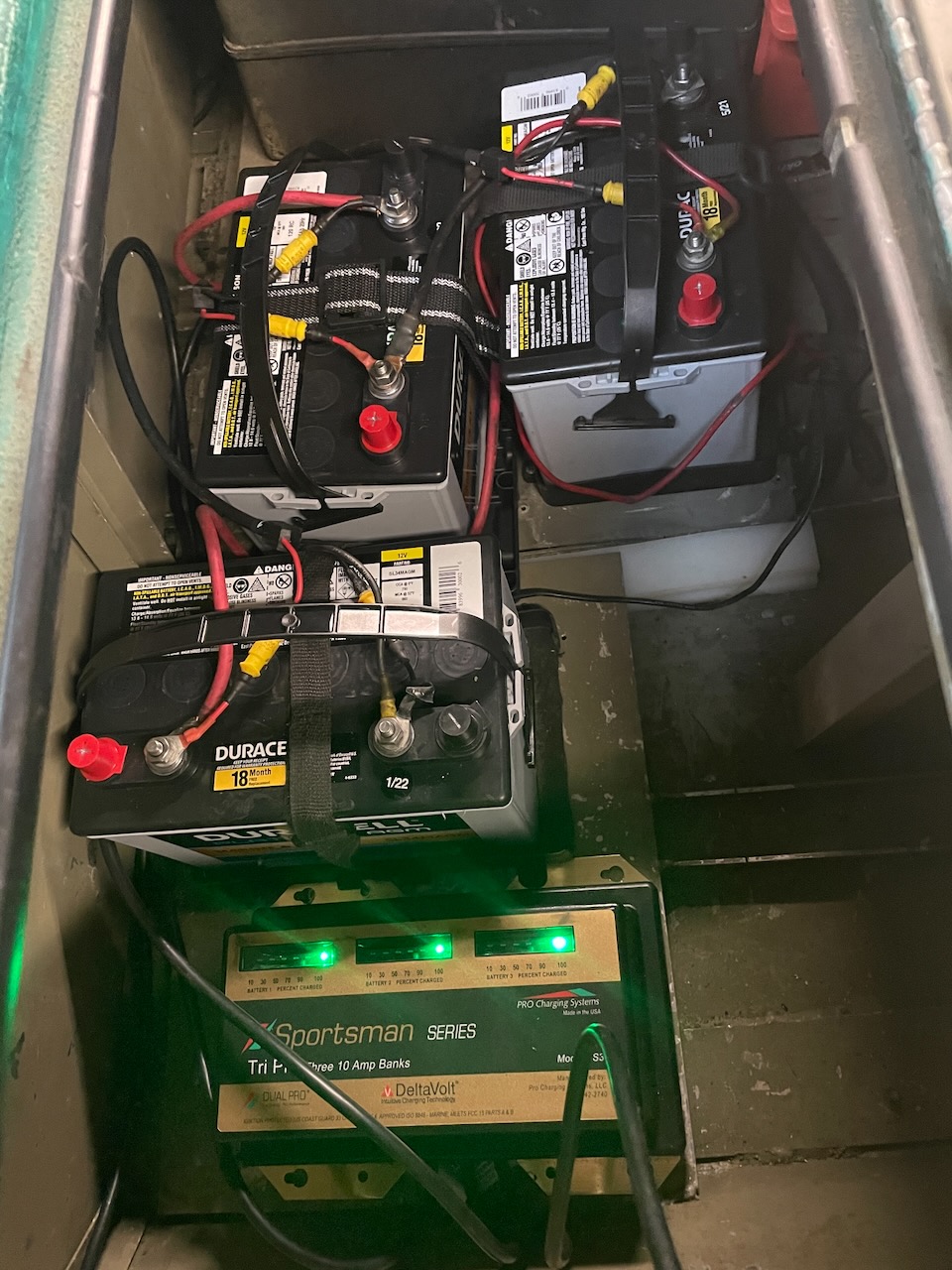
I later converted the trolling-motor bank to lithium as well. My 36-volt Minn Kota Ultrex was powered by three Duracell 55Ah Group 34M AGM batteries wired in series. Each battery weighed 42.5 pounds, putting the total battery weight at 127.5 pounds.
This was the original setup: three Duracell AGM batteries and the Dual Pro charger. It worked, but it put a lot of weight in the bow.
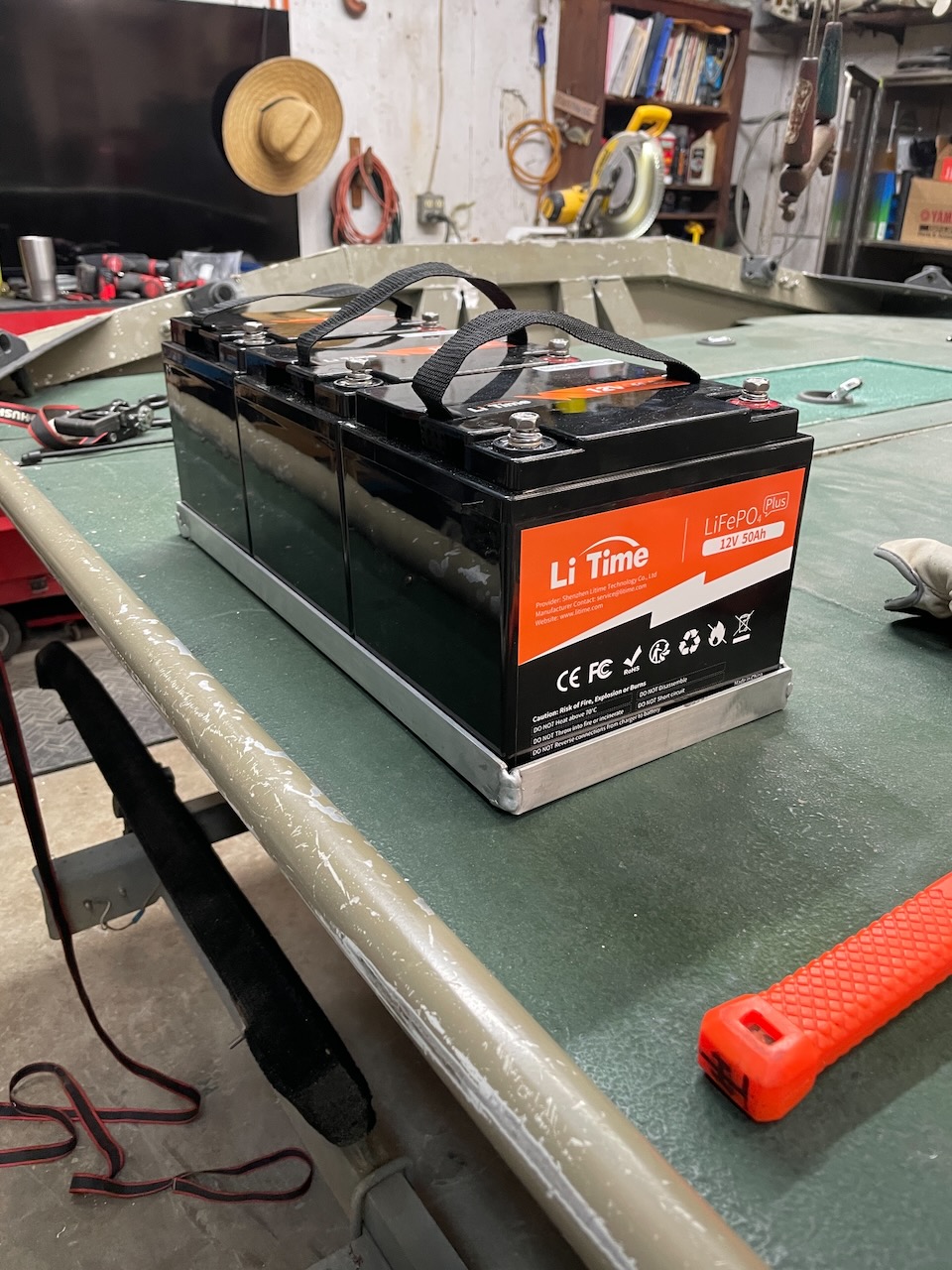
I replaced them with three LiTime 12V 50Ah LiFePO4 batteries, also wired in series for 36 volts. At 11.5 pounds each, the lithium batteries weigh only 34.5 pounds altogether. That change alone removed 93 pounds from the front of the boat.
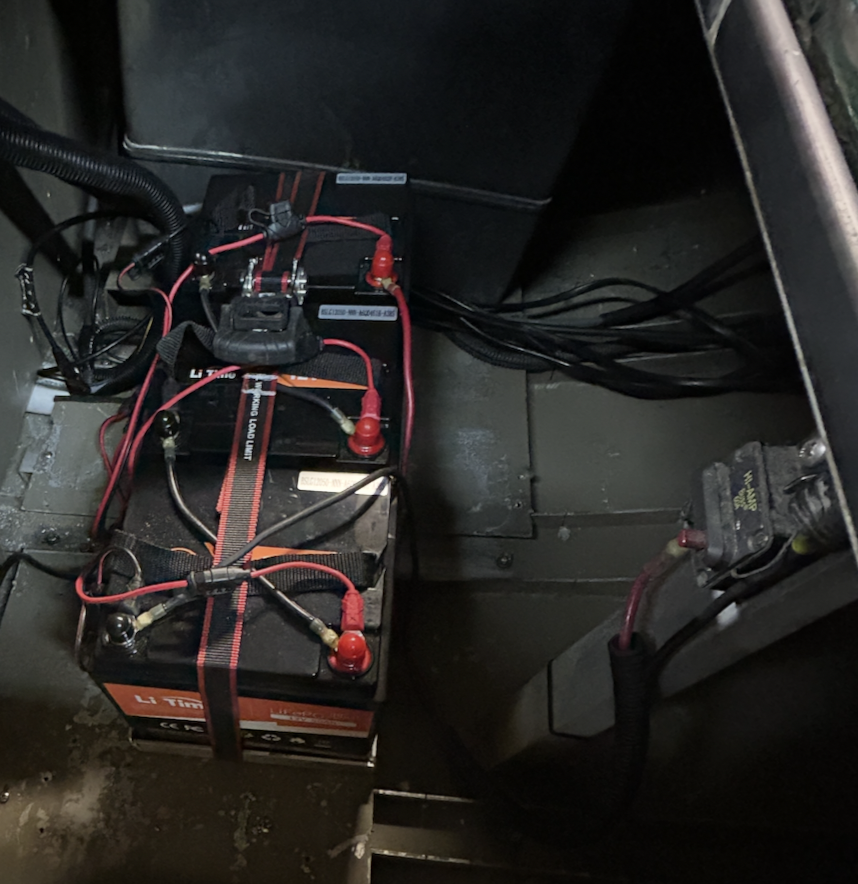
The charger also had to be replaced. My Dual Pro charger weighed 17.2 pounds, while the lithium-compatible NOCO 5-amp three-bank charger weighs 6 pounds. Between the batteries and charger, the upgrade removed a total of 104.2 pounds from the bow.
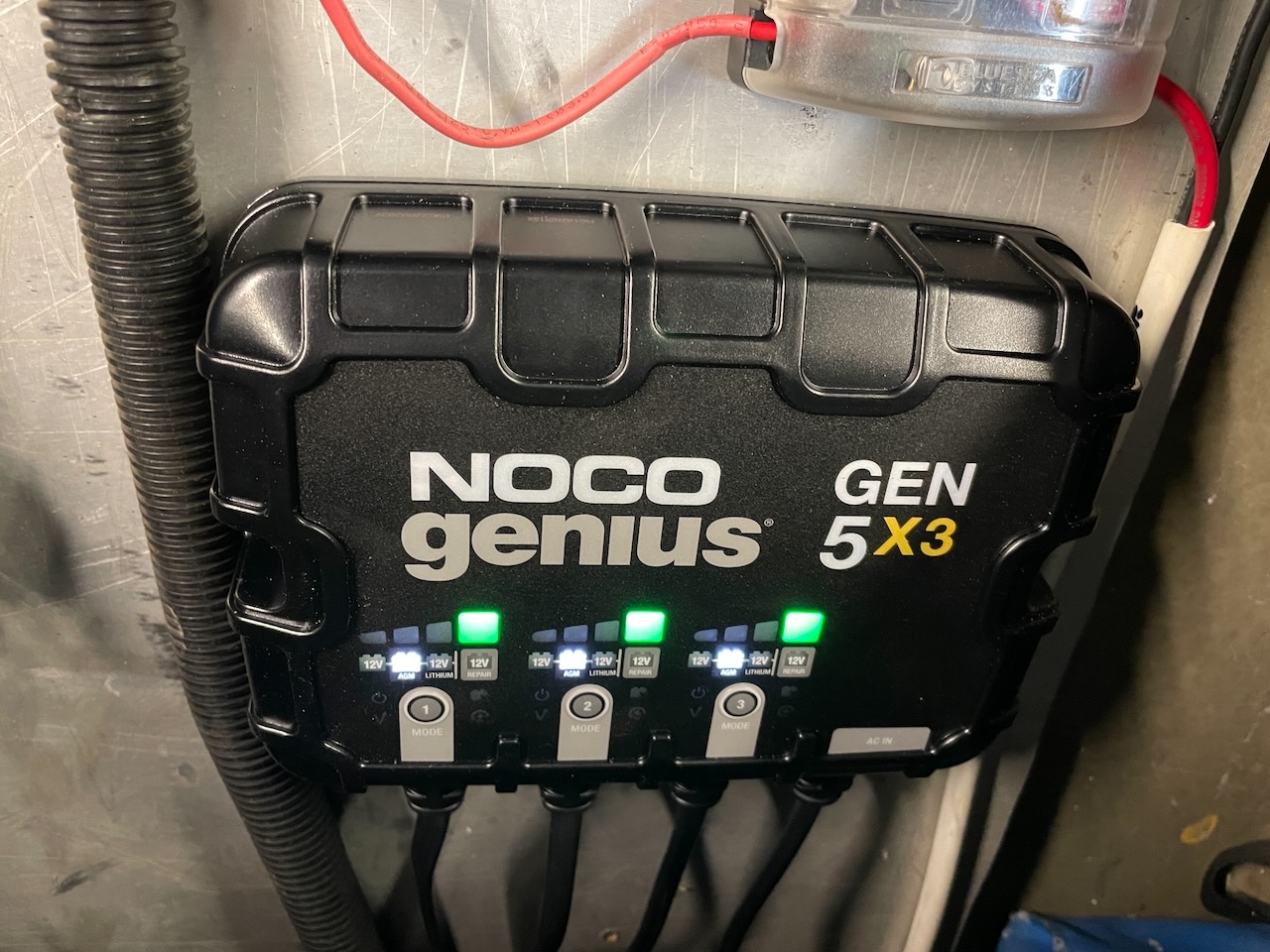
For my river fishing, the batteries typically last through three or four full-day trips before they need to be charged. More importantly, removing over 100 pounds from the front of the boat produced a noticeable improvement in performance.
Using the guideline of 25 pounds per powerhead horsepower, that weight reduction improves the power-to-weight ratio by the equivalent of about 4.2 powerhead horsepower, or roughly 2.9 horsepower at the jet.